Positive Offset
(+18mm to +45mm) —
Factory / Tucked
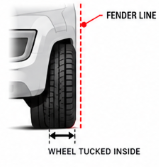
Minimal risk of fender rubbing; protection of the bodywork against dirt.

Lower 48 States

On Wheel & Tire Packages

Klarna · Affirm · Afterpay
Show wheels guaranteed to fit

Get a fitment check before you order.
Finding the right tire for your truck or SUV is less about chasing the biggest setup and more about matching the size to how you actually drive. The 295/75R17 option sits in a useful middle ground for owners who want more sidewall and more overall diameter than shorter sizes without jumping straight into an extreme build. On many rigs, that means a stronger off-road look, extra clearance under the diffs, and more tire to work with on rough surfaces. It can also change gearing feel, clearance at full lock, and how the truck behaves on the road, so fitment details still matter.
When you compare these two sizes, the width stays the same at 295 mm, and both fit an r17 wheel. The main difference is height. A 295/70R17 has a shorter sidewall and a smaller overall diameter than a 295/75R17, which usually makes the 70-series size easier to run on a stock suspension setup. The taller 75-series option gives you more sidewall and a little more clearance off road, but it may need closer attention to wheel offset, backspacing, and room at the fender liner or body mount. Some search tools shorten these listings to 29575r17 or 29570r17, and you may also see 75r17 or 70r17 shorthand in filters, but the fitment logic is the same.
The best tire for you depends on where your truck or SUV spends most of its time. For a daily-driven rig, look for a tread that delivers a quieter ride and predictable wet-road manners. If your setup sees dirt, rocks, or hunting trails, focus more on sidewall strength, tread voids, and cut resistance. Always check the recommended wheel width range before you buy, because wheel width affects how the tire sits and how the contact patch behaves. Load rating matters too, especially if you tow, haul, or run added gear. Brands such as Toyo and Mickey Thompson are popular in this category because they offer different tradeoffs in road comfort and trail traction. It helps to shop by actual use, not just by appearance, because not every tire that looks right will fit right.
Generally, a lift is recommended, but there is no universal answer. Some trucks can run this size with minor trimming or the right wheel specs, while others rub on stock suspension during turns or suspension compression. Offset, backspacing, tire model, alignment, and the amount of factory clearance all affect the result. If you are trying to avoid surprises, verify fitment before ordering and plan around how the truck is really used, not just how it sits parked.
The size label gives you the basics: 295 mm section width, a sidewall height equal to 75 percent of that width, and fitment for a 17 inch wheel. Actual measurements can still vary a bit from one tire brand to another because tread design and casing shape are not identical. That is why it helps to compare the manufacturer’s listed diameter, measured width, and approved wheel range before mounting.
There is no single best all-terrain choice for every truck. The right pick depends on noise tolerance, winter use, road mileage, and how often you leave pavement. Some drivers want a tire that provides a quiet highway ride, while others will trade a little road noise for stronger sidewalls and better bite in loose terrain. Toyo and Mickey Thompson are two brands many buyers compare in this size, but the smarter move is to look at tread design, load range, and your real clearance needs rather than buying by brand name alone.
If you want to find and shop this size online in the US, Level 4x4 is a practical place to start. You can compare options for your truck or SUV in one place and narrow the list by how you actually drive. If you are not sure whether this size makes more sense than a 295/70R17 setup, ask for fitment help before you buy. A quick fitment check can save time and help you avoid ordering the wrong tires.
Tires

 4x Custom Wheels & Tires

.png)