Wheel Offset Explained: Positive vs. Negative vs. Zero for Trucks | Level 4x4
Mar 19, 2026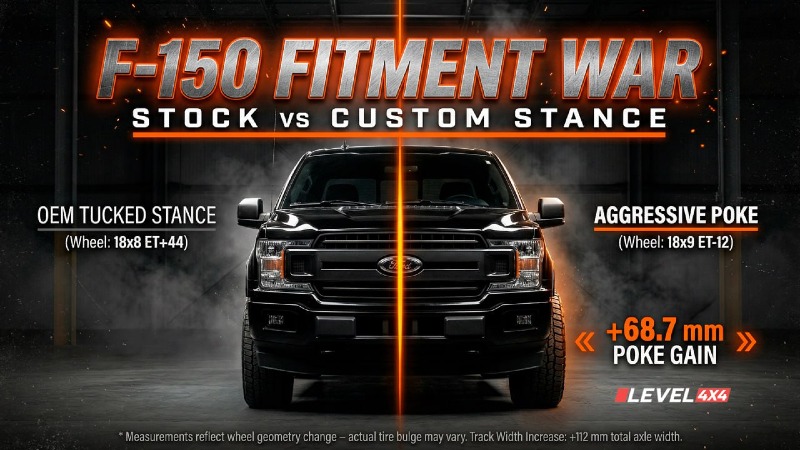
Wheel Offset Explained: Positive vs. Negative vs. Zero — What It Really Means for Your Truck
Most factory trucks come with a "tucked" look that lacks the aggressive presence enthusiasts crave. This aesthetic is a result of high positive offset, designed by manufacturers for conservative street use. However, when you upgrade to larger tires or seek a wider stance, understanding the geometry of wheel offset is what separates a clean build from a costly mistake. At Level 4x4, we allow you to preview these changes instantly using our integrated Wheel Visualizer, combining this visual confidence with our Verified Fitment Service to ensure your truck performs as boldly as it looks.
What is Wheel Offset?
Wheel offset is the measurement in millimeters from the hub mounting surface of the wheel to its geometric centerline.
The Technical Foundation
Offset determines how far "in" or "out" a wheel sits relative to the truck's suspension and fenders. According to the foundational text "Fundamentals of Vehicle Dynamics" by Thomas D. Gillespie, altering this position shifts the steering axis and changes the leverage applied to the suspension components.
Why Millimeters Matter
Even though wheels are sold in inch-based widths in the U.S., offset is a metric standard. A shift of just 5mm can be the difference between clearing your brake calipers and catastrophic interference. Our online visualizer helps you see these differences in real-time, matching your specific truck specs to ensure the look and clearance are exactly what you expect.
FAQ: The Basics
How do I find my wheel offset?
Most aftermarket and OEM wheels have the offset stamped or cast into the back of the hub or a spoke, often preceded by the letters "ET" (e.g., ET35). This is the industry-standard way to identify specifications without professional tools.
Can I measure it myself?
Yes. Lay the wheel flat on its face, measure the total width, and find the centerline. Then measure the distance from the back edge to the mounting hub surface. Subtract the centerline from this measurement to find your offset.
Positive, Zero, and Negative Offset: Which One is Right?
The three types of offset — Positive (+), Zero (0), and Negative (-) — determine your truck's stance: "Tucked," "Flush," or "Poked."
Positive Offset (+): The Conservative Standard
The mounting surface is closer to the street side (front) of the wheel, pulling the wheel inward toward the suspension.
What it means for builds: A +35mm or +40mm offset is common for factory setups and "street-style" upgrades that keep tires under the fenders.
Advantage: Keeps road debris under the fenders and maintains neutral steering returnability.
Zero Offset (0): The Balanced Middle
The mounting surface is perfectly aligned with the wheel’s centerline, typically resulting in a "flush" look where the tire edge aligns with the fender on leveled trucks. This setup offers a compromise between aggressive aesthetics and mechanical longevity.
What it means for builds: A 0mm offset is the sweet spot for leveled American pickups (like the Ford F-150 or RAM 1500) aiming for a clean, flush stance without fender modifications.
Advantage: It provides the most balanced mechanical load on your truck's hub bearings and maintains a predictable steering feel by keeping the scrub radius near zero.
Negative Offset (-): The Aggressive "Poke"
The mounting surface is closer to the brakes (back side), pushing the entire wheel outward beyond the fenders to create "poke."
Standard for: Lifted trucks and off-road builds requiring a wider track for lateral stability.
Research Insight: Moving to extreme negative offsets (like -44mm) significantly alters the fatigue life of the wheel's flange and hub assembly.
FAQ: Choosing Types
What is a "bad" offset?
An offset is considered "bad" if it causes tires to rub against suspension components (too much positive) or fenders (too much negative). Furthermore, an extreme offset that exceeds the load capacity of your truck's hub bearings can lead to premature failure.
What does 35 offset mean?
A +35 offset means the mounting surface is 35mm away from the wheel's centerline toward the outer face. This is a common factory specification for many modern SUVs and trucks, keeping the wheel tucked within the arches.
Offset vs. Backspacing: The Professional Difference
"Offset is what you see on the spec sheet. Backspacing is what saves your steering knuckle. You need to know both."
Offset measures from the centerline in millimeters, while backspacing measures from the mounting surface to the back edge of the wheel in inches.
Understanding the Correlation
Backspacing is often preferred by off-roaders because it directly identifies internal clearance for steering knuckles and struts. A study in the "Journal of Multi-body Dynamics" notes that suspension compliance and steering offset are sensitive parameters that must be balanced to avoid "compliance steer" during braking.
Table 1: Offset to Backspacing Conversion (For 9-inch Wide Wheels)
Wheel Width | Offset (mm) | Backspacing (in) | Typical Stance Result |
|---|---|---|---|
9.0" | +44 mm | 6.75" | Factory Tucked (Ford F-150) |
9.0" | +18 mm | 5.75" | Nearly Flush |
9.0" | 0 mm | 5.0" | Flush to Fender |
9.0" | −12 mm | 4.5" | 1" Poke (Aggressive) |
9.0" | −24 mm | 4.0" | 2" Poke (Deep Dish) |

Case Study: The Ford F-150 Fitment Benchmark
As the best-selling pickup in the USA since 1977, the Ford F-150 serves as the perfect baseline for understanding fitment changes.
Most modern F-150s leave the factory with a baseline wheel spec of 18x8 ET +44mm. Below is how the stance changes when moving to wider 9" or 10" wheels with various offsets.
Table 2: Poke, Inner Clearance, and Track Δ (F-150 Base: 18x8 ET +44)
Setup | Wheel Size & ET | Poke Δ (Outward) | Inner Δ (Suspension) | Track Δ (Total) |
|---|---|---|---|---|
18x9" ET+18 | 18x9" +18 mm | +38.7 mm | −13.3 mm | +52 mm |
18x9" ET0 | 18x9" +0 mm | +56.7 mm | −31.3 mm | +88 mm |
18x9" ET−12 | 18x9" −12 mm | +68.7 mm | −43.3 mm | +112 mm |
20x10" ET−24 | 20x10" −24 mm | +93.4 mm | −42.6 mm | +136 mm |
20x10" ET−44 | 20x10" −44 mm | +113.4 mm | −62.6 mm | +176 mm |
Table 3: The "1mm Rule" (Offset Effect on 9-inch Wheels)
Every 1mm change in offset shifts the wheel by 1mm, while overall track changes by 2mm.
Вот эта таблица в нужном формате:
18x9" Wheel with ET−12 | Poke Δ (mm) | Inner Δ (mm) | Track Δ (mm) |
|---|---|---|---|
+44 | +12.7 | +12.7 | 0 |
+25 | +31.7 | −6.3 | +38 |
+18 | +38.7 | −13.3 | +52 |
0 | +56.7 | −31.3 | +88 |
−12 | +68.7 | −43.3 | +112 |
−44 | +100.7 | −75.3 | +176 |
Ready to transform your stance?
Don't gamble with your truck's performance. Shop our curated Wheel & Tire Packages where our specialists verify every spec to ensure a perfect, rub-free install the first time.
Engineering Impact: Scrub Radius and Component Wear
"Every 25mm of negative offset adds roughly 147 Nm of extra stress to your hub. That's not aesthetics — that's engineering."
Changing your offset directly alters your "Scrub Radius" — the distance between your steering axis and the center of the tire's footprint on the ground.
Scrub Radius and Steering Behavior
When you move to a heavy negative offset, the tire no longer pivots in place but "scrubs" along an arc. Research in the "International Journal of Automotive Technology" shows this significantly affects steering returnability and increases the torque required for low-speed maneuvers.
Accelerated Bearing Wear
Research in SAE Technical Paper demonstrates that shifting the offset adds approximately 147 Nm of additional moment to the hub assembly for every 25mm shift toward negative offset.
Why Expert Verification Matters
Achieving the perfect stance requires more than a calculator; it requires expert human verification to prevent rubbing and mechanical failure.
"A wheel visualizer shows you the look. A fitment specialist saves you from the consequences."
At Level 4x4, we take the guesswork out of the equation. We provide an interactive Wheel Visualizer on our site so you can see how different designs and stances complement your truck’s specific color and trim.
However, we go beyond visuals. We take mechanical safety seriously: every Wheel & Tire Package order is subject to a mandatory, multi-point fitment check by our specialists. We manually review your Year, Make, Model, and suspension modifications (lift kits, leveling kits, etc.) to ensure proper bolt patterns, hub bores, and load ratings before anything ships.
FAQ: Maintenance & Safety
Does negative offset affect my Electronic Stability Control (ESC)?
Research in SAE Technical Paper indicates that extreme changes in track width and weight distribution caused by aggressive offset can compromise the system's ability to maintain yaw stability during critical maneuvers.
Do I need new lug nuts?
Yes. Factory lug nuts are designed for OEM wheels with specific seat types. Aftermarket wheels almost always require conical or tapered lug nuts to ensure a safe and secure mount. Using the wrong hardware can lead to wheel vibration or even detachment.
What is Hub-Centric fitment?
A hub-centric fitment means the wheel is centered by the truck's hub rather than just the lug nuts. This is critical for preventing high-speed vibrations on American highways and ensuring the load is correctly distributed across the axle assembly.
Sources
Other articles
How to Read Tire Sizing: The Complete Guide for Trucks & 4x4s
Looking at the sidewall of a tire can feel like trying to decode a secret language. With all the letters, numbers, and slashes, it's easy to get overwhelmed – especially when you're investing in a premium setup for your truck, Jeep, or SUV.
At Level 4x4, we believe customizing your rig should be exciting – not stressful. Whether you're replacing worn OEM tires or sizing up for an aggressive off-road stance, understanding your tire size is the first step to getting the perfect fit.
Here's a complete, no-fluff guide to reading tire sizes, tailored specifically for truck and 4x4 owners.
Where to Find Your Current Tire Size
Before you can shop, you need to know what you're running now. Check any of these three sources:
Driver's door jamb sticker – The manufacturer's recommended size for your exact trim, printed right where the door meets the frame.
Owner's manual – Lists factory size and load specs.
Sidewall of your current tire – Shows the actual size installed (which may differ from factory if a previous owner sized up).
If the door jamb size and your current sidewall don't match, you already have an aftermarket setup – worth noting before you order replacements.
The Two Main Tire Sizing Formats
In the truck and 4x4 world, you'll run into two formats: Metric (LT/P) and Flotation (High Flotation). Both describe the same thing – just in different units.
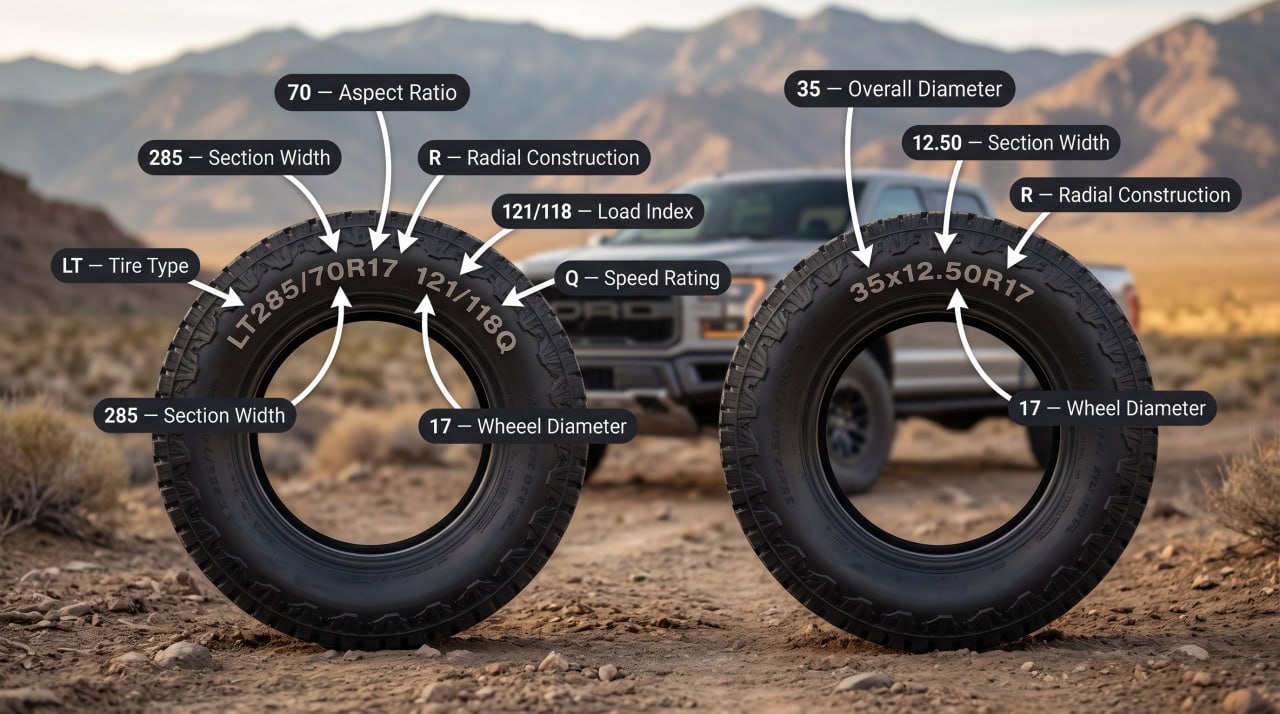
Metric Tire Size (Example: LT285/70R17 121/118Q)
This is the most common format on factory trucks and many aftermarket tires. Here's what each part means:
LT (Tire Type) – Light Truck. Built with reinforced sidewalls and higher load capacity – essential if you tow, haul, or take your truck off-road. Other letters you might see:
P – Passenger (lighter SUVs and daily highway driving).
ST – Special Trailer (trailer use only – never a tow vehicle).
No letter – Euro-metric, sized similarly to P-metric but with different load standards.
285 (Section Width) – Width from sidewall to sidewall, measured in millimeters.
70 (Aspect Ratio) – Sidewall height as a percentage of the section width. Here, sidewall height = 70% of 285mm ≈ 200mm. A higher number means a taller, meatier sidewall – better for airing down on trails.
R (Construction) – Radial, the standard for modern tires. You may rarely see "D" for bias-ply (off-road specialty) or "B" for belted bias.
17 (Wheel Diameter) – Wheel size the tire is designed to fit, in inches. This number must match your wheel exactly.
The Bonus Numbers: Load Index & Speed Rating (121/118Q)
121/118 (Load Index) – Maximum weight the tire can safely support. For LT tires you'll often see two numbers: the first (121 = 3,297 lbs) is the capacity when used as a single wheel, the second (118 = 2,910 lbs) is per tire when running duals on the rear axle. Never downgrade the load rating from factory if you tow or haul.
Q (Speed Rating) – Maximum safe sustained speed. Off-road and mud-terrain tires usually carry lower ratings (Q = 99 mph, R = 106 mph) because they're engineered for traction and durability, not track speeds.
Flotation Tire Size (Example: 35x12.50R17)
If you're lifting your truck or going for an aggressive aftermarket look, you'll see Flotation sizes a lot. Everything is in inches, so they're easier to read at a glance.
35 (Overall Diameter) – Total tire height: 35 inches.
12.50 (Section Width) – Tire width: 12.5 inches.
R (Construction) – Radial.
17 (Wheel Diameter) – Fits a 17-inch wheel.
Metric ↔ Flotation: Quick Conversion
Flotation Size | Closest Metric Equivalent | Actual Diameter |
|---|---|---|
33x12.50R17 | LT285/70R17 | ≈ 32.7" |
35x12.50R17 | LT315/75R17 | ≈ 35.6" |
37x12.50R17 | LT315/70R18 (or 37" flotation) | ≈ 34.3" (metric) / 37" (flotation) |
A common misconception: an "LT285/70R17" is often marketed as a 33-inch tire, but the actual diameter is closer to 32.7". Diameter listed on the box ≠ true measured diameter – always check the spec.
Other Important Sidewall Markings
The size string isn't the only thing stamped on your tire. Here's what else to look for:
Load Range (LR C, D, E, F) – Indicates ply rating and pressure capacity. Most aggressive LT tires are Load Range E (10-ply equivalent). Heavy-duty hauling may require Load Range F.
M+S – Mud and Snow rated for basic all-season traction. Most A/T and M/T tires carry this mark.
3PMSF (Three-Peak Mountain Snowflake) – Certified for severe snow conditions. If you drive in winter regions, look for this symbol – M+S alone isn't enough for true snow performance.
DOT Code – A 4-digit number at the end of the DOT serial showing week and year of manufacture (e.g., "3823" = the 38th week of 2023). Tires older than 6 years should be inspected, regardless of tread depth – rubber hardens with age and loses wet grip.
Max Load & Max Pressure – Printed near the bead. Never exceed the max cold pressure listed on the tire.
When to Size Up
Upgrading tire size is the fastest way to gain ground clearance and give your truck an aggressive stance. But jumping from a 31-inch OEM tire to a 35-inch mud-terrain isn't bolt-on – it usually requires:
A leveling or lift kit to clear the new tire on full lock and full compression.
Custom wheels with the correct offset to push the tire away from suspension components and avoid rubbing.
Possible upper control arm upgrades, fender trimming, and re-gearing depending on tire size.
For exact lift heights and offset recommendations per tire size, see our Lift Guide for 33", 35" & 37" Tires.
Still Unsure? Let the Experts Handle Fitment
You don't have to be a tire engineer to get the perfect setup. At Level 4x4, we take the guesswork out of the equation.
Simply enter your Year, Make, Model, and Trim into our search tool. Once you place an order, our dedicated fitment specialists review every single wheel and tire package to confirm bolt pattern, offset, load rating, and clearance – before anything ships. If you're running a lift, leveling kit, or spacers, drop those details at checkout and we'll verify the stance.
FAQ: Tire Sizing
How do I know if a tire will fit my exact vehicle?
Use our Shop by Vehicle filter with your Year, Make, Model, and Trim. The system pulls only compatible sizes. If you've already modified your suspension, contact us before ordering – we'll verify clearance manually.
Can I mix metric and flotation sizes on the same vehicle?
No. All four tires should match in format, diameter, width, and load rating. Mixing sizes affects handling, ABS calibration, and differential wear.
Why does my new tire diameter not match the number on the box?
Marketed size (e.g., "33-inch") is often rounded. Actual measured diameter depends on width, aspect ratio, and load. Always check the spec sheet, not the marketing label.
What load index do I need for towing?
Match or exceed the factory load index listed on your door jamb sticker. Going lower compromises towing safety – going higher is fine.
How old is too old for a tire, even if the tread looks good?
Six years is the inspection threshold. Ten years is the hard replacement limit, regardless of tread depth – rubber compounds harden and lose wet-weather grip with age.
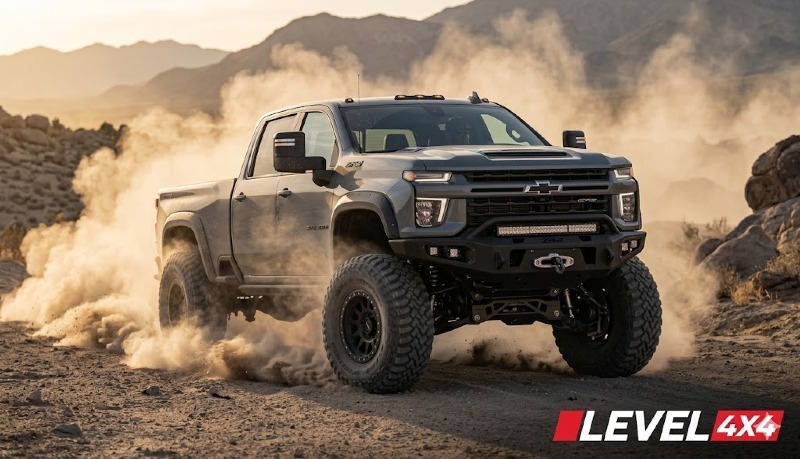
Shop Wheels with Confidence: The Ultimate Wheel Specs Guide
Swapping the wheels on your truck or SUV changes everything – from its aggressive look and off-road capability to how it handles on the highway. But buying aftermarket wheels isn't a guessing game. Being off by just a few millimeters can lead to dangerous steering vibrations, rubbing against suspension parts, or hardware failure. Plus, the stakes are high – once a tire is mounted to an aftermarket wheel, the item is considered used and is no longer eligible for standard returns.
At Level 4x4, our goal is zero surprises. We put together this guide on wheel size, bolt pattern, offset, and hub bore so you can shop with confidence and get your dream stance right the first time.
Finding Your Specifications
Before ordering, it's crucial to know what your truck currently runs and what clearances you have. You can typically find your factory specifications:
Stamped on the back of the wheel hub or inner spokes
On the driver's side door jamb sticker
Within your vehicle owner's manual
A full aftermarket specification string usually looks something like this: 17x9J ET-12 6x139.7 CB106.1.
Here's what those numbers actually mean.
Wheel Size: Diameter and Width
The first numbers in the sequence (e.g., 17x9) determine the physical footprint of the wheel.
Diameter (17"): This is the total distance across the center of the wheel, measured from the inner bead seat to the opposite bead seat – not across the outer physical lip. Off-road enthusiasts often prefer smaller diameters (like 17-inch wheels) to allow for massive, meaty tire sidewalls that absorb trail impacts. Meanwhile, street-focused show builds may lean toward 20-inch, 22-inch, or 24-inch wheels.
Width (9"): Also measured internally between the bead seats, wheel width determines the permissible range of tire sizes you can safely mount. Mounting a tire that is too wide or too narrow for the rim can lead to uneven tread wear, crowning, and unstable cornering.The Tire and Rim Association publishes the approved tire-to-rim width pairings that manufacturers follow when engineering their fitments.
The "J": You may occasionally see a letter following the width (e.g., 9J). This simply indicates the flange contour type – the universal standard for modern passenger vehicles and light trucks.
Bolt Pattern (Pitch Circle Diameter)
Your bolt pattern (e.g., 6x139.7 or 6x5.5) dictates whether the wheel will physically bolt onto your vehicle's axle hub. This measurement requires a dead-on match – a 5x114.3mm pattern will not safely fit a 5x115mm hub. Top brands like Method Race Wheels and Fuel Off-Road engineer wheels specific to these tight tolerances.
Lug Count: The first number (6) represents the number of lug holes. Heavy-duty trucks and off-roaders usually need 6 or 8 lugs to handle massive torque payloads, while smaller SUVs may use 4 or 5 lugs.
Diameter: The second number (139.7mm or 5.5 inches) is the diameter of an imaginary circle intersecting the exact center of each lug hole.
How to Measure at Home: If you have an even number of lugs (4, 6, or 8), simply measure from the center of one hole directly across the hub to the center of the opposite hole. For 5-lug wheels, the geometry is trickier – you must measure from the extreme outer edge of one lug hole to the exact center of the hole furthest away.
Offset and backspacing describe the exact same physical positioning of the wheel, but they use different reference points. Getting these specs right determines whether your wheels will tuck inside the fenders, sit flush, or poke out aggressively. For a deepe dive, see our complete guide on wheel offset.
Wheel Offset (ET) – Measured in millimeters, offset is the lateral distance from the wheel's geometric centerline to the hub mounting pad.
Positive Offset (+): The mounting pad is closer to the street side, pulling the wheel deep into the fender. This is the conservative standard for modern factory trucks.
Zero Offset (0): The mounting pad is dead center, offering a balanced, flush look on leveled trucks.
Negative Offset (-): The mounting pad is closer to the brake side, pushing the wheel barrel outward to create a deep-dish aesthetic and an aggressive "poke."
Wheel Offset Comparison Table
Type Offset | Positive (+) | Zero (0) | Negative (-) |
|---|---|---|---|
Hub Position | Mounting pad closer to the wheel face | Mounting pad centered | Mounting pad closer to the back of the wheel |
Looks | Tucked in (closer to fender) | Flush with fender | Deep Dish / Sticks out |
Common Use | FWD cars, modern SUVs, many OEM setups | Older 4x4s, trucks, classic off-road setups | Off-road, lifted trucks, RWD builds, stance setups |
Backspacing – Preferred by the off-road suspension industry, backspacing measures the total physical distance from the extreme inner lip of the wheel to the mounting pad in inches. It directly dictates your internal clearance for upgraded steering knuckles, struts, and upper control arms.
Pushing wheels far out with extreme negative offsets alters your scrub radius and increases the leverage applied to your suspension, which can accelerate wear on your wheel bearings.
Hub Bore and Centricity
The hub bore (or center bore) is the large machined hole directly in the center of the wheel's backpad.
OEM wheels are hub-centric – the center bore matches the truck's axle hub perfectly, and the heavy steel hub carries the vehicle's immense vertical weight.
Aftermarket wheels (like many from Fuel Off-Road or KMC Wheels) are frequently built with intentionally oversized center bores so a single wheel design can fit multiple vehicle platforms, making them lug-centric.
If you install lug-centric wheels without correction, the relatively thin lug studs are forced to bear the truck's entire weight – which routinely leads to severe steering wheel vibrations at highway speeds.
The fix is simple but required: always install hub-centric rings. These precise plastic or aluminum shims bridge the void between the oversized wheel bore and your specific vehicle hub, converting a lug-centric fitment into a safe, vibration-free hub-centric fitment.
Frequently Asked Questions
Can I reuse my factory lug nuts with aftermarket wheels?
Almost never. Aftermarket wheels generally require specific lug nut seat types – typically a 60-degree conical or tapered seat – that differ from factory ball or mag seats. Reusing OEM lug nuts damages the wheel seat and can cause the hardware to loosen while driving. We offer compatible lug nut kits, including locking options, directly at checkout.
Do I need a lift kit for negative offset wheels?
Aggressive negative offsets widen your track width and increase your turning arc. Pushing the wheels outward often causes the tires to crash into the front bumper valance or inner fender liners during turns. A leveling kit, lift kit, or minor plastic trimming is usually required to safely run negative offsets. For specific tire size requirements, see our suspension lift guide.
What happens if I get my specs wrong?
Getting specs wrong leads to mechanical interference, dangerous high-speed vibrations, and wasted money – mounted wheels cannot be returned. That's exactly why our fitment specialists verify every order before it ships.
How do I find my bolt pattern if I don't have the owner's manual?
Check the markings on your current wheels or the driver's side door jamb sticker. Most vehicles also have well-documented bolt patterns by year and model. If you're not sure, select your vehicle on our site or message us – it takes about 30 seconds and prevents ordering the wrong fit.
Is backspacing or offset more important?
Neither replaces the other – you need to know both. Offset is the industry-standard spec sheet measurement, while backspacing directly tells you how much internal clearance you have for suspension and steering components. Together, they give you the full picture of where your wheel sits.
Buy with Confidence at Level 4x4
Nailing that custom look means getting your size, bolt pattern, offset, and hub bore exactly right. Don't leave your fitment to chance.
At Level 4x4, our dedicated fitment specialists verify every single order for exact compatibility – zero surprises. Simply enter your vehicle's Year, Make, Model, and Trim into our system and explore top-tier wheel and tire packages from brands like Fuel Off-Road, Method Race Wheels, and KMC Wheels. All of our complete packages arrive professionally mounted, precision balanced, and ready to bolt directly onto your truck.
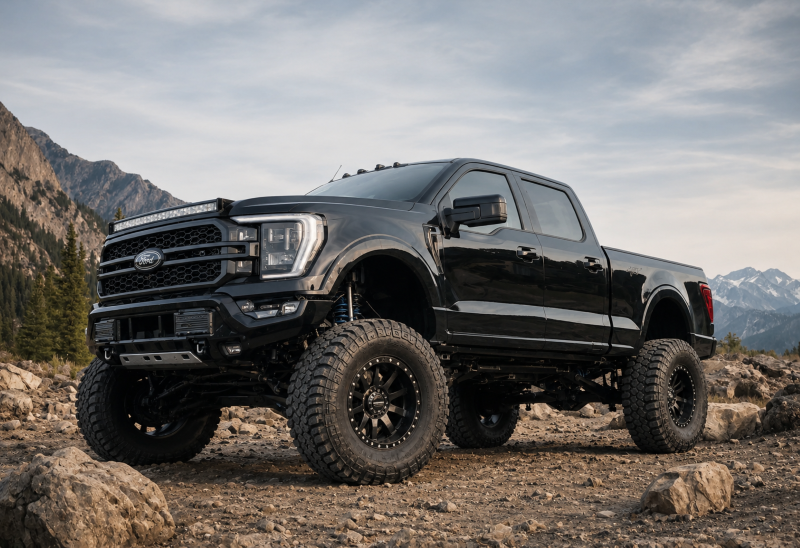
Do I Need a Lift Kit for 33", 35", or 37" Tires? Real Setup Guide
Do I Need a Lift Kit for 33", 35", or 37" Tires? Real Setup Guide
Upgrading to 33", 35", or 37" tires is the ultimate way to give your truck a bolder, customized stance that stands out. However, bolting on larger rubber changes much more than just ground clearance — it fundamentally alters your vehicle's suspension geometry, gearing, and braking performance.
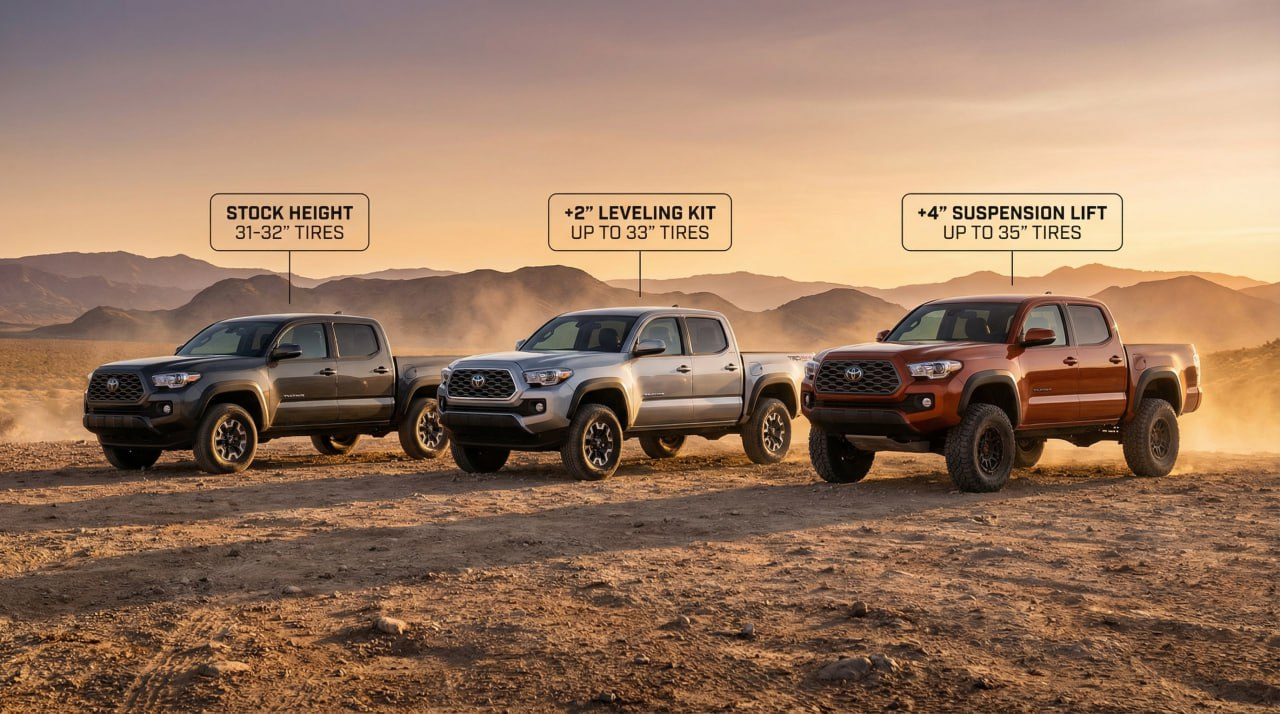
A lift kit provides the vertical clearance needed for larger tires, but achieving a rub-free setup requires a precise calculation of wheel offset, tire width, and suspension travel. Generally, 33" tires require a 0 – 2" leveling kit, 35" tires demand a 2 – 4" suspension lift, and 37" tires necessitate a comprehensive 4 – 6" lift with drivetrain modifications.
 https://level4x4.com/storage/IrNjZTCXulVJLllvM4vqDmxxaKDxRr0FOjth9J2M.png
The Core Requirements: How Tire Size Dictates Lift Height?
Tire size directly dictates how much lift you need. A leveling kit (1 – 2") clears 33" tires, a 2 – 4" suspension lift handles 35", and 37" tires require a full 4 – 6" lift to prevent fender rubbing and maintain safe suspension travel.
33" Tires: The Accessible Upgrade
Fitting 33-inch tires is the most straightforward upgrade. Most modern half-ton trucks can accommodate this size with minimal modification.
Lift Required: 0 to 2 inches (Leveling Kit).
Supporting Mods: Minor plastic trimming inside the wheel well.
Wheel Offset: Positive to zero offset (e.g., +18 to 0).
35" Tires: The Turning Point
Moving to 35-inch tires requires physically altering the vehicle's resting height to ensure the tires do not crash into the body during turns.
Lift Required: 2 to 4 inches (Suspension Lift).
Supporting Mods: Upgraded Upper Control Arms (UCAs), bump stop drops, and potential crash bar modifications.
Wheel Offset: Zero to mild negative offset (e.g., 0 to -12).
37" Tires: The No-Compromise Build
Mounting 37-inch tires is a major engineering shift. It's not just about fitting the tire in the wheel well — it's about ensuring the vehicle can handle the massive increase in size.
Lift Required: 4 to 6 inches (Full Suspension Lift).
Supporting Mods: Re-gearing, heavy-duty steering components, and brake upgrades.
Wheel Offset: Negative offset (e.g., -12 to -24).
Table 1: Lift & Modification Cheat Sheet
Target Tire Size | 33" | 35" | 37" |
|---|---|---|---|
Typical Lift Required | 0–2" (Leveling Kit) | 2–4" (Suspension Lift) | 4–6" (Full Lift Kit) |
Wheel Offset Recommendation | +18 to 0 | 0 to −12 | −12 to −24 |
Supporting Mods Usually Needed | Minor plastic trimming | UCAs, minor trimming, bump stops | Re-gearing, calibration, brake upgrades |
FAQ: Tire Size and Lifts
Can I fit 35" tires on a stock truck?
Rarely. Without a 2 – 4" lift, 35" tires will severely rub against your crash bars and fenders, especially when turning or hitting bumps.
Will a leveling kit fit 33" tires?
Yes, a 1.5 – 2" leveling kit is usually perfect for clearing 33" tires while removing the factory nose-down rake.
The Clearance Equation: Why Lift Height Isn't Enough?
Lift height only moves the truck body up; it doesn't affect how much clearance the tire has during suspension travel and full-lock turns. Wheel offset, backspacing, and tire width dictate whether your tire will rub against the frame or suspension components.
Understanding Suspension Geometry
When you lift a truck, you change the operational angles of the factory suspension. According to Dixon (2009) in Suspension Geometry and Computation, altering the ride height without correcting the control arm angles leads to poor camber curves and bump steer. This is why aftermarket Upper Control Arms (UCAs) are mandatory for lifts over 2 inches.
The Role of Wheel Offset
Offset determines how far "in" or "out" a wheel sits. A shift of just 5mm can cause a tire to hit the upper control arm (if too positive) or the outer fender (if too negative).
The Bearing Load Factor
Pushing wheels further out with negative offset increases the mechanical lever arm on your wheel hub. A 2022 study in SAE Technical Papers (Lee et al.) highlights that aggressive negative offset, combined with the heavy unsprung mass of larger tires, exponentially increases the fatigue load on automotive wheel bearings.
FAQ: Clearance and Offset
What is the best offset for 35" tires?
A zero to mild negative offset (0 to -12) is generally best to keep the tire off the control arms while minimizing fender rubbing.
Why do I need new Upper Control Arms (UCAs)?
Factory UCAs max out their ball joint angles when lifted. Aftermarket UCAs restore proper geometry and allow for full suspension travel.
The Hidden Impact: Drivetrain, Gearing, and Braking
Larger tires increase unsprung weight and change the effective gear ratio, which reduces acceleration, throws off your speedometer, and drastically increases braking distance.
Gearing and Tractive Effort
Upgrading to larger tires creates a numerically lower effective gear ratio. Wong (2008) in Theory of Ground Vehicles explains that increasing tire diameter directly decreases the tractive effort delivered to the road. This makes the truck feel sluggish. For example, moving from 31" to 37" tires decreases effective torque by nearly 19%.
"Bolt on 37" tires without re-gearing, and you haven't upgraded your truck — you've handicapped it." — Level 4x4 Fitment Specialists
Table 2: Gear Ratio Correction Guide (Baseline: 33" Tires)
Stock Gear Ratio (on 33") | Equivalent Ratio for 35" Tires | Equivalent Ratio for 37" Tires |
|---|---|---|
3.31 | ~3.51 | ~3.71 |
3.55 | ~3.77 | ~3.98 |
3.73 | ~3.96 | ~4.18 |
Speedometer and Braking Physics
Because a larger tire covers more ground per revolution, your speedometer will read slower than your actual speed. Furthermore, heavier tires increase rotational inertia. A comprehensive report by the NHTSA (2006) on The Pneumatic Tire, alongside Pacejka's (2012) Tyre and Vehicle Dynamics, confirms that increased unsprung mass and rotational inertia severely compromise factory braking systems, increasing stopping distances significantly.
"Bigger tires add unsprung weight your factory brakes were never engineered to stop. That's not a mod — that's a liability." — Level 4x4 Fitment Specialists
Table 3: How Tire Size Affects Dynamics
Конечно. Если оставить хедер как на картинке, а данные разместить вертикально под каждым заголовком, получится так:
Tire Size | Effective Torque Change | Speedometer Reading Error |
|---|---|---|
33" | ~6% Decrease | Reads ~6.1% slower |
35" | ~13% Decrease | Reads ~12.1% slower |
37" | ~19% Decrease | Reads ~18.5% slower |
FAQ: Gearing and Braking
Do I need to re-gear for 35" tires?
It's highly recommended but not strictly mandatory. However, re-gearing is absolutely essential for 37" tires to prevent transmission damage.
How do I fix my speedometer after buying larger tires?
You must use an electronic recalibration tool (programmer) to update the truck's computer with the new tire diameter.
Do It Right the First Time with Level 4x4
Guessing your fitment can lead to damaged parts and a terrible ride. Level 4x4's Verified Fitment Service ensures your wheel, tire, and suspension choices are perfectly matched before your order ships.
Expert Verification
You don't have to be a suspension engineer to get the perfect stance. Whether you're aiming for a functional 33" daily driver or an aggressive 37" off-road build, our team reviews your Year, Make, Model, and suspension specs.
Ready to Install
Explore our Wheel and Tire Packages. We mount and balance every package professionally, installing TPMS sensors so your setup arrives at your door ready to bolt on. Use our Wheel Visualizer to see your setup, and let our fitment specialists confirm every spec before it ships.